Views: 0 Author: Site Editor Publish Time: 2026-08-12 Origin: Site
Acquiring industrial food equipment represents a high-stakes capital expenditure. Process certainty in these investments remains non-negotiable for modern manufacturers. Microwave drying delivers superior speed and unmatched efficiency compared to conventional hot-air drying methods. However, deploying poorly validated equipment invites severe operational risks. It often leads to irreversible product degradation, localized thermal runaway, or critical compliance failures on the production floor.
Facility managers cannot afford to guess when integrating high-power electromagnetic systems. This article provides food technologists and facility engineers a definitive, evidence-based framework. We explore how to rigorously prove hardware capabilities before signing off on deployment. You will learn to navigate every critical step, from initial pilot-scale feasibility studies to full-scale production validation.
Define success criteria early: Validation requires mapping moisture targets, dielectric properties, and microbial log reductions before hardware selection.
Uniformity is the primary benchmark: True validation hinges on proving food drying uniformity at scale, not just in isolated lab tests.
Phased testing mitigates risk: Rigorous microwave process validation demands structured Factory Acceptance Testing (FAT) and Site Acceptance Testing (SAT).
Look beyond the magnetron: Evaluating a continuous food dryer requires assessing cavity design, control systems, and integration with existing HVAC and material handling lines.
Moving from traditional convective drying to a microwave food dryer alters the thermodynamic profile of your product entirely. Conventional methods heat from the outside in. Microwave energy penetrates the product, creating volumetric heating. Operating without strict baseline metrics guarantees scale-up failure. You must define measurable targets before introducing any hardware.
Clear baseline metrics prevent scope creep during equipment commissioning. Engineering teams must document these target outcomes explicitly:
Acceptable moisture content ranges: Specify the exact percentage and the allowable standard deviation.
Organoleptic preservation requirements: Establish quantitative limits for color shifting, texture degradation, and volatile flavor retention.
FSMA/HACCP compliance targets: Identify necessary microbial elimination benchmarks, such as a verifiable 5-log pathogen reduction.
Furthermore, engineers must understand dielectric properties. A food’s ability to absorb microwave energy directly correlates to its water content. As the product loses moisture during the drying cycle, its dielectric loss factor drops. The food absorbs less energy as it dries. Validation protocols must account for these shifting variables. If you apply constant power to a drying product, the risk of charring increases exponentially.
Many buyers focus heavily on raw kilowatt power. This approach introduces risk. You must shift the focus toward how the machine applies and controls that energy. High power means nothing if the system distributes it unevenly.
Poorly designed electromagnetic fields inherently create "hot spots" and "cold spots." If product passes through a cold spot, it retains excess moisture, risking microbial growth. If it passes through a hot spot, it burns. True validation requires proving food drying uniformity under load.
Evaluate the cavity design thoroughly. Ask the manufacturer how they manipulate wave distribution. Engineers typically integrate wave stirrers and specialized waveguides to scatter the energy field. Additionally, belt configurations matter. Materials used for the conveyor must be microwave-transparent. These mechanical choices directly eliminate uneven moisture distribution.
The energy source dictates your control limits. Industry standards generally offer two distinct generator pathways. You must frame this choice based on the specific fragility of your food product.
Here is a comparison of common microwave generator technologies:
Generator Type | Power Output Profile | Frequency Control | Primary Use Case |
|---|---|---|---|
Traditional Magnetron | High (Cost-effective for bulk) | Fixed / Limited precision | Robust materials, high-volume rapid drying |
Solid-State | Moderate (Scalable arrays) | Highly precise / Dynamic | Fragile foods, exact moisture profiling |
Magnetrons provide cost-effective, high-power solutions. They work well for rugged bulk commodities. Solid-state generators cost more but offer precision frequency control. They adapt to shifting dielectric properties instantly. Solid-state technology also boasts a significantly longer operational lifespan.
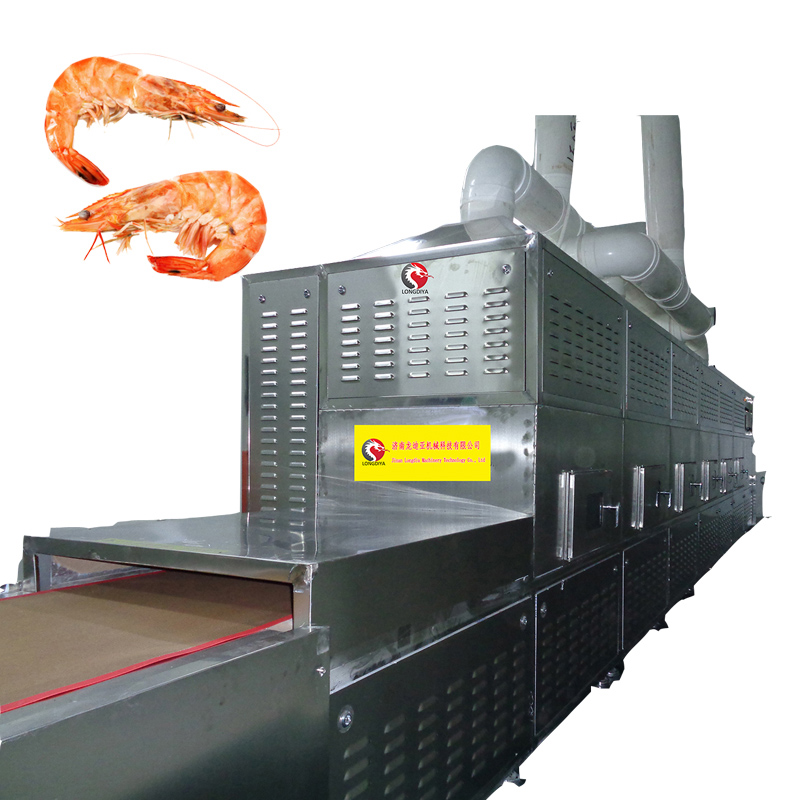
Batch systems differ vastly from continuous operations. Evaluating a continuous food dryer requires a strict assessment of modularity. You must determine if the system maintains volumetric heating consistency when conditions change.
In a live production environment, belt speeds fluctuate. Product bed depths vary slightly. A well-designed continuous system must detect these fluctuations and modulate power accordingly. Without this dynamic scalability, you will generate inconsistent batches.
Rigorous microwave process validation follows a strictly phased approach. Skipping steps to accelerate installation inevitably leads to extensive downtime later. Follow this proven execution protocol.
Phase 1: Pilot-Scale Feasibility (Proof of Concept)
Begin testing your specific food matrix in the manufacturer's laboratory. Never rely on generalized data. Identify initial thermal runaway risks during this phase. Establish the ideal kilowatt-per-kilogram (kW/kg) ratios required to hit your moisture targets safely.
Phase 2: Factory Acceptance Testing (FAT)
Travel to the Original Equipment Manufacturer (OEM) facility. Validate the physical hardware build using simulated or actual product. Confirm all safety interlocks function correctly. Ensure utility consumptions, including electrical draw and cooling water requirements, match the initial theoretical projections.
Phase 3: Site Acceptance Testing (SAT) and FSMA Compliance
Conduct the final validation inside your live facility. Utilize fiber-optic temperature probes and thermal imaging cameras for continuous thermal mapping. Standard metal thermocouples arc in microwave fields, making fiber-optics mandatory. No validation is complete until the system repeatedly passes internal quality assurance checks over multiple production shifts.
Even perfectly designed electromagnetic cavities fail if auxiliary systems perform poorly. Facility engineers must anticipate operational blind spots before commissioning the unit.
Material Handling Bottlenecks: A microwave dryer is only as effective as the upstream feeding mechanism. Electromagnetic energy targets mass. If your vibratory feeder creates an inconsistent bed depth, it will instantly invalidate your drying parameters. Thin patches of product will absorb too much energy and scorch. Thick patches will remain damp. Uniform feeding equals uniform drying.
Exhaust and Condensation Management: Microwaves drive moisture from the center of the food to the surface rapidly. This characteristic rapid moisture release demands robust extraction. Address the exhaust system capabilities immediately. If the HVAC integration fails to remove vapor efficiently, surface condensation occurs inside the cavity. Moisture buildup on stainless steel walls often leads to electrical arcing. Arcing damages equipment and creates severe fire risks.
Operator Adoption: Highly complex interfaces invite human error. An intimidating control panel forces operators to guess. Highlight the risk of overly complicated software. Validate that the control panel offers straightforward recipe management. Operators need one-touch recipe loading. Furthermore, ensure the system includes automated shut-offs triggered by infrared temperature spikes.
Selecting the right OEM determines the success of your project. Treat the procurement process as a technical audit rather than a simple purchasing decision.
Demand verifiable data. Reject suppliers who promise "100% efficiency" or zero product loss. Real engineering involves thermodynamic limits. Look for transparent engineering reports showing realistic energy conversion rates and expected thermal losses.
Evaluate test facility access. Only shortlist OEMs providing dedicated pilot testing centers. Your product must run on scaled-down versions of their actual production hardware. Desktop microwave tests do not translate to industrial continuous belts. You need empirical data generated by industrial-grade magnetrons or solid-state arrays.
Scrutinize their Service Level Agreements (SLAs). Assess the supplier's mean-time-to-repair (MTTR) for critical components. Generators, chokes, and wave stirrers require specialized maintenance. If a magnetron fails, you need to know exactly how many hours it takes to procure and install a replacement.
Take decisive next steps. Advise your procurement team to request an initial feasibility study. Require a complete dielectric analysis of your specific product from your top two shortlisted vendors. Compare their findings objectively.
Validating an industrial microwave dryer requires continuous alignment between dielectric science, mechanical engineering, and regulatory standards. Success demands early metric definitions, phased protocol execution, and a deep understanding of hardware limitations.
Equipment acquisition functions best as a technical partnership. The right vendor will actively guide you through empirical validation. They will prioritize proof-of-concept testing rather than rushing a hardware sale.
Take action today. Compile your critical target metrics, including baseline throughput, starting moisture, and target moisture variations. Contact an application engineer at a reputable facility to schedule your initial pilot lab test. Mitigate your capital expenditure risks through rigorous, data-driven validation.
A: Throughput volume and validation complexity define the difference. Continuous systems process high volumes on moving belts. They require dynamic thermal mapping and precise bed depth control to ensure uniformity. Conversely, batch systems hold static product inside a closed cavity. Batch units are easier to validate using fixed sensors, but they cannot match the high-throughput demands of large-scale commercial facilities.
A: You prevent thermal runaway by deploying continuous monitoring and dynamic power modulation. Engineers implement infrared (IR) sensors or fiber-optic probes to track real-time surface temperatures. These sensors feed data into closed-loop control systems. The system then automatically adjusts generator power output based on the product's shifting dielectric properties. Maintaining precise, consistent product bed depth upstream also drastically reduces runaway risks.
A: No. This is a common industry myth. Because microwave energy heats volumetrically, it significantly reduces overall thermal exposure time from hours down to minutes. This rapid processing typically results in higher retention of heat-sensitive vitamins and volatile flavor compounds compared to prolonged conventional hot-air drying. Proper validation ensures the energy targets moisture without degrading the nutritional matrix.