Views: 0 Author: Site Editor Publish Time: 2026-07-13 Origin: Site
In commercial food production and professional kitchens, texture often determines success. It is the deciding factor between a premium product and a rejected one. Consumers expect specific crunches, crusts, and juiciness when they bite into a meal. A slight deviation in mouthfeel can easily ruin your brand reputation.
Operators face a constant trade-off between throughput speed and textural integrity. While conventional ovens deliver expected crusts and browning, they create severe production bottlenecks. Slower cooking times reduce overall factory output. They also limit your ability to scale operations rapidly during peak demand.
Evaluating the textural outcomes of different cooking methods helps you optimize production lines. Understanding the underlying physics is critical before investing in new commercial processing infrastructure. We will explore how different thermal processes affect food matrices. You will also learn how hybrid systems bridge the gap between quality and speed.
Volumetric vs. Surface: Microwave heating generates heat within the food (volumetric), preserving internal moisture but limiting surface crusting, whereas conventional heating relies on outside-in conduction/convection.
The Maillard Deficit: Microwaves struggle to achieve the high surface temperatures necessary for the Maillard reaction (browning and crisping) without specialized equipment.
Textural Risks: Poorly implemented microwave processes risk rubbery proteins or soggy breading due to unchecked moisture migration.
The Hybrid Solution: Modern commercial operations increasingly rely on hybrid systems, utilizing microwaves for rapid internal cooking and conventional methods for textural finishing.
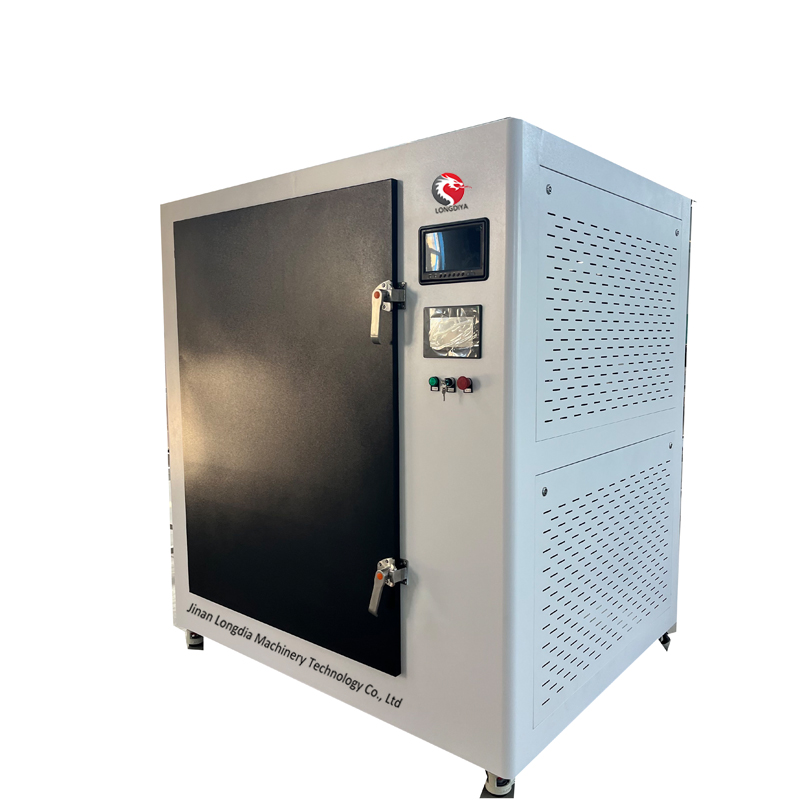
Equipment Selection: Sourcing industrial Microwave Heating Equipment requires evaluating energy efficiency, spatial heat distribution, and the specific dielectric properties of your food matrix.
Cooking is essentially applied physics. To control texture, you must understand how thermal energy interacts with your food. The mechanism you choose dictates the final cellular structure of the product. The fundamental difference lies in how heat travels through the material.
Conventional systems rely on external heat sources. Heat transfers from the environment to the food's surface. It then slowly penetrates the center via conduction. This outside-in approach is the historical standard for commercial cooking.
This mechanism heavily dehydrates the exterior layer. The dehydration forms a crust, creating the crispness consumers love. Meanwhile, the interior remains relatively insulated. The slow heat transfer protects internal moisture up to a certain point. However, prolonged exposure inevitably dries out the entire product.
Dielectric heating works entirely differently. Electromagnetic waves penetrate the food matrix. They cause polar molecules, primarily water, to vibrate rapidly. This vibration generates immense friction. Heat develops simultaneously throughout the mass rather than just on the surface.
This rapid internal heating creates high internal vapor pressure. Steam forms inside the food and pushes moisture outward. This outward migration often prevents exterior crisping. It can also permanently alter the starch and protein matrix. Without intervention, you rarely achieve a traditional crust.
Below is a summary chart comparing the two primary mechanisms.
Feature | Conventional Heating | Dielectric Heating |
|---|---|---|
Energy Transfer | Outside-in (Surface to Core) | Volumetric (Simultaneous) |
Primary Mechanism | Conduction, Convection, Radiation | Molecular Friction (Water) |
Moisture Movement | Evaporates from surface inward | Pushed from core to surface |
Textural Result | Crispy exterior, slower internal cook | Soft exterior, rapid internal cook |
Different foods react uniquely to thermal energy. The specific dielectric properties of a food determine its heating profile. Salt content, fat ratios, and free water directly influence the outcome. You must analyze your specific product category to predict textural shifts.
Muscle fibers and connective tissues are highly sensitive to temperature changes. Managing them requires precise control over energy input.
Conventional: Renders fat slowly. It melts connective tissues gently, creating a desirable bark or crust. It excels at developing complex roasted flavors.
Microwave: Can cause rapid protein denaturation. High uncontrolled power levels violently squeeze water from muscle fibers. This leads to a tough, "rubbery" texture. You must control pulsing precisely to avoid this outcome.
Baking relies on delicate structural transformations. Gluten networks and starches must set at specific temperatures to hold their shape.
Conventional: Promotes an even crumb structure. The dry ambient heat drives off surface moisture immediately. This forms a rigid crust that supports the bread's shape.
Microwave: Rapid internal heating accelerates starch gelatinization. Moisture rapidly leaves the core. This often causes structural collapse. Upon cooling, rapid starch retrogradation can make the product excessively chewy or hard.
Plant cells contain rigid walls. Breaking them down gently is key to appetizing textures.
Conventional: Long heating periods risk cellular breakdown. Boiling or slow baking leaches nutrients. Vegetables often turn mushy if left too long.
Microwave: Excels at rapid, steam-like cooking. It excites the water molecules inside the plant cells instantly. This maintains cellular integrity. It preserves crunch and vibrant colors far better than prolonged traditional methods.
Consumers often associate microwaves with soggy leftovers or cold spots. These historical complaints stem from domestic appliance limitations. Industrial systems operate on entirely different engineering principles. They actively solve the inherent physical challenges of dielectric heating.
If you process coated or breaded items, uncontrolled vapor pressure is your enemy. Steam rushes to the surface and blows the breading off. Industrial systems tackle these pain points head-on. They use advanced engineering to manipulate the electromagnetic field.
Multi-Magnetron Systems: Domestic units use one magnetron, creating standing waves. This causes intense hot and cold spots. Industrial continuous tunnels use dozens of strategically placed magnetrons. They eliminate standing waves and guarantee uniform energy distribution.
Solid-State Generators: Older systems use fixed frequencies. Modern solid-state technology allows variable frequency control. You can tune the wavelength to match the changing dielectric properties of the food as it cooks.
Susceptor Technology: You can use specialized packaging or trays. Susceptors absorb electromagnetic energy and convert it into localized radiant heat. This allows you to achieve browning directly against the food surface.
Managing internal vapor pressure is the secret to textural success. You cannot blast a product continuously. Strategies like pulsed heating cycles allow the product to absorb energy gradually. Resting phases let the internal thermal equilibrium settle. This prevents steam from violently rupturing the cellular structure. It stops the degradation of texture during rapid processing.
You do not have to choose between speed and quality. The industry standard is shifting rapidly toward hybrid solutions. Industrial continuous or batch hybrid ovens offer the best of both physical worlds. They combine the raw speed of electromagnetics with the finishing power of convection.
Synergistic heating represents a major leap in food processing. You begin by using Microwave Heating to rapidly raise the core temperature of a product. The volumetric energy cooks the interior in seconds rather than minutes. Immediately following this, the product enters an impingement or convection zone.
High-velocity hot air blasts the product. This flash-evaporates surface moisture instantly. It triggers the Maillard reaction exactly when needed. The interior remains juicy because it was not subjected to long, dehydrating oven times. The exterior becomes crispy and brown.
The business outcomes are substantial. Operations routinely reduce overall cooking time by 50 to 70 percent. Facility throughput increases drastically. More importantly, you maintain the strict textural standards of a fully conventionally cooked product. Customers notice no drop in quality.
Investing in thermal processing technology is a major operational decision. You must align the equipment capabilities with your specific product matrix. A machine that perfectly pasteurizes liquids might ruin a breaded chicken patty.
First, define what textural preservation looks like for your specific product. If you produce precooked patties, moisture retention is your primary goal. If you manufacture ready-meals, structural integrity of pasta or vegetables takes precedence. Establish measurable quality metrics before evaluating machines.
Throughput vs. Footprint: Evaluate continuous belt systems versus batch processing. Belt systems offer massive volume but require linear factory space. Batch systems offer higher flexibility for diverse product lines but require more manual handling.
Control and Scalability: Investigate the generator technology. Does the equipment offer variable frequency or solid-state generators? Precise energy delivery prevents the rubbery textures associated with over-processing.
Compliance and Safety: Industrial systems must be rigorously shielded. Verify safety interlocking systems. Check electromagnetic leakage standards. Ensure all food-contact surfaces meet strict sanitation regulations.
Never purchase based on theoretical specifications alone. Require vendors to conduct pilot tests using your specific food matrix. Dielectric properties vary wildly based on salt, water, and fat content. A formulation change of just 2% salt can alter the heating profile completely. Demand empirical proof that the equipment preserves your required texture.
Neither thermal method is universally better for texture. Each serves a distinct physical purpose. Conventional heating excels at exterior crisping and flavor development. Dielectric heating excels at rapid, moisture-retaining internal cooking. The choice depends entirely on your product goals.
For commercial operators, adopting advanced Microwave Heating Equipment or hybrid systems is the most viable path forward. It allows you to scale production drastically without sacrificing the textural hallmarks of traditional cooking. You gain speed without losing quality.
We advise you to schedule a lab trial or pilot run immediately. Work directly with an equipment manufacturer to map the exact thermal and textural changes in your specific product lines. Seeing the physical results firsthand is the best way to inform your processing strategy.
A: No. In most cases, it preserves nutrients better. Water-soluble vitamins break down during prolonged exposure to heat and water. Because dielectric cooking works much faster and uses less water, it protects heat-sensitive nutrients effectively.
A: It accelerates a process called starch retrogradation. Rapid heating drives moisture out of the dough core. As the bread cools down quickly, the gelatinized starches recrystallize aggressively. This alters the internal structure, making the crumb tight, chewy, or unpleasantly hard.
A: Standard standalone systems cannot. They do not heat the surrounding air enough to crisp the surface. However, commercial systems utilize susceptor packaging, advanced solid-state frequencies, or integrated hybrid convection jets to achieve excellent browning and crust formation.
A: No, it is highly controlled. Domestic units suffer from standing waves that create cold spots. Commercial units use advanced multi-magnetron designs, wave-stirring technology, and continuous belt movement. This ensures uniform energy distribution and completely eliminates cold spots.