Views: 0 Author: Site Editor Publish Time: 2026-08-13 Origin: Site
Traditional convection and conduction drying methods often force manufacturers into frustrating production bottlenecks. These legacy thermal systems consume massive amounts of energy. They also frequently yield uneven moisture profiles across final products. Heat must slowly penetrate from the outside in. This slow transfer risks surface case-hardening. It also degrades the structural integrity of your materials.
You need a more efficient mechanism. Volumetric heating provides this much-needed shift. Electromagnetic waves penetrate materials and heat them from the inside out. This approach eliminates the slow heat transfer of convection. This guide provides operations and engineering leaders an objective evaluation framework. We will help you assess this technology, its architectural variations, and its implementation realities.
You will learn how to match equipment types to your specific throughput requirements. We will explore how microwave drying equipment works on a molecular level. You will discover practical ways to integrate these systems seamlessly into your existing production workflows.
Volumetric Heating: Microwave moisture removal targets water molecules directly, drastically reducing residence times compared to conventional thermal drying.
Process Scalability: From batch processing to continuous microwave drying, equipment can be tailored to throughput requirements and facility footprints.
Quality Retention: Specialized formats, like vacuum microwave drying, allow for rapid moisture removal at low temperatures, preserving heat-sensitive compounds.
Evaluation Mandate: Successful microwave dryer selection requires pilot-scale material testing to validate dielectric responses and calculate true ROI against higher initial CapEx.
Understanding electromagnetic heating requires a look at molecular physics. Industrial systems typically operate at 915 MHz or 2.45 GHz frequencies. These electromagnetic waves rapidly reverse polarity millions of times per second. Polar molecules inside your product attempt to align with this shifting field. Water molecules are highly polar. They oscillate violently as they try to keep up. This rapid movement generates intense internal friction. The friction immediately converts into thermal energy.
This process drives highly efficient microwave moisture removal. Heat generates uniformly throughout the material volume. We call this volumetric heating. It stands in stark contrast to conventional surface-level drying.
Convection drying relies on hot air transferring heat to the material surface. Heat then conducts slowly into the core. This often causes the outer layers to dry too quickly. Case-hardening occurs when the surface seals shut. This traps interior moisture and ruins product quality. Volumetric heating prevents this entirely. Water vaporizes inside the material and easily escapes through open surface pores.
Another major advantage is natural moisture leveling. Electromagnetic energy preferentially absorbs into areas containing more water. Wetter spots draw more microwave energy automatically. Drier edges absorb significantly less energy. This creates an incredibly uniform final moisture profile. You no longer have to worry about over-drying the edges of your product just to dry the center.
Manufacturers design the industrial microwave dryer in several different formats. Each architecture serves specific operational needs. You must match the equipment design to your production volume and material constraints.
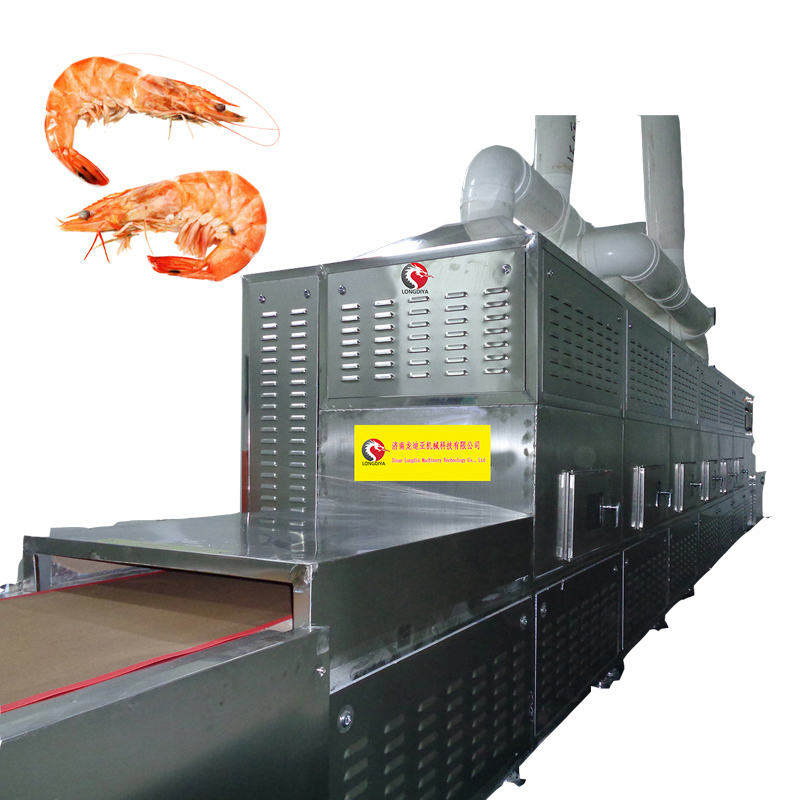
High-volume production lines demand uninterrupted processing. Continuous microwave drying systems use a tunnel design. Conveyor belts carry materials continuously through the electromagnetic field. These systems shine in industrial food processing, textile manufacturing, and building materials production.
They handle massive throughput efficiently. However, implementation requires strict upstream control. You must manage conveyor speed precisely. Material loading must remain completely consistent. If you load uneven piles onto the belt, energy absorption varies. This creates inconsistent drying. Maintaining a uniform material bed depth is a critical best practice.
Some materials degrade when exposed to high heat. Pharmaceuticals, nutraceuticals, and premium agricultural products demand gentle processing. Vacuum systems solve this problem brilliantly. They combine a low-pressure environment with volumetric heating.
Lowering atmospheric pressure drops the boiling point of water. You can vaporize moisture at temperatures as low as 30°C to 40°C. This prevents thermal degradation completely. It preserves vitamins, flavors, and delicate cellular structures. The implementation reality involves higher mechanical complexity. Vacuum pumps require dedicated maintenance. The capital expenditure is inherently higher due to heavy-duty vacuum vessel construction.
Not every operation requires continuous throughput. Many facilities run low-volume, high-mix production schedules. Research and development labs also need smaller units for pilot testing. Batch cavity ovens look similar to highly scaled-up consumer microwaves.
They offer excellent flexibility for varied product lines. Operators load materials onto trays or rotating carousels. They close the heavy door and run a specific recipe cycle. The capital cost remains much lower than continuous systems. The main limitation is manual labor. Loading and unloading cycles interrupt the production flow. They do not scale well for massive industrial output.
Transitioning to electromagnetic heating fundamentally alters your facility operations. You must evaluate the true business impact objectively. Let us examine the tangible operational shifts.
The most dramatic impact involves throughput and residence time. Conventional thermal drying often takes hours or even days. Large industrial kilns move at a glacial pace. Volumetric heating slashes this time dramatically. Processes that previously took four hours frequently drop to fifteen minutes. This rapid turnaround eliminates massive staging areas for work-in-progress inventory.
Spatial efficiency also improves significantly. Conventional drying tunnels require enormous facility footprints. They rely on long exposure times, which dictates immense equipment length. Microwave units deliver energy instantly and volumetrically. They achieve the same moisture reduction in a fraction of the physical space. You can often reclaim valuable factory floor real estate.
You must also address energy efficiency and changing utility costs. Traditional systems burn cheap natural gas. Electromagnetic systems run entirely on electrical grid power. Electricity costs more per kilowatt-hour than gas in most regions. However, the overall energy use drops substantially. You no longer waste energy heating massive volumes of factory air. Energy goes directly into the water molecules. You must calculate this trade-off carefully based on your local utility rates.
Product quality outcomes frequently justify the technology switch alone. Rapid, low-temperature drying reduces product shrinkage. It prevents the color degradation typically caused by prolonged heat exposure. Nutrient retention in food products jumps significantly. Yields improve because you generate far less scrap material.
Table 1: Performance Comparison: Conventional vs. Microwave Drying
Operational Metric | Conventional Convection Drying | Microwave Volumetric Drying |
|---|---|---|
Heating Mechanism | Surface-to-core (Outside-in) | Volumetric (Inside-out) |
Residence Time | Hours to Days | Minutes |
Facility Footprint | Massive (requires long tunnels) | Compact (highly efficient space use) |
Moisture Uniformity | Prone to over-drying edges | Excellent natural moisture leveling |
Primary Energy Source | Natural Gas / Steam | Electrical Grid Power |
Industrial electromagnetic equipment often triggers safety concerns among operational staff. You must address occupational safety directly and scientifically. Modern equipment strictly adheres to stringent regulatory emission limits set by organizations like OSHA and the FCC.
Engineers design these systems with heavy-duty metallic shielding. They incorporate specialized microwave choke structures at conveyor entry and exit points. These chokes actively suppress energy leakage. Redundant safety interlock systems monitor all access doors. If an operator opens a door, the magnetrons shut down in milliseconds. Exposure risks remain virtually non-existent under normal operating conditions.
You must actively dispel the radioactive myth on your factory floor. Many people confuse microwaves with nuclear radiation. We must clarify the physical difference. Microwaves represent non-ionizing radiation. They do not possess enough energy to strip electrons from atoms. They cannot alter cellular DNA. They simply create friction and heat. Your products do not become radioactive.
However, you must manage real operational risks. Material arcing represents a genuine hazard. Plasma arcing occurs when metallic contaminants enter the electromagnetic field. It can also happen during extreme localized over-drying. Arcs can ignite flammable materials. Reputable manufacturers mitigate this risk expertly. They integrate advanced infrared (IR) sensing systems. These sensors detect sudden temperature spikes instantly. Automated fire suppression systems flood the cavity with water or inert gas if a spark occurs.
Common Mistakes in Safety Management:
Failing to install robust metal detectors upstream of the drying cavity.
Ignoring daily physical inspections of the choke pins and shielding structures.
Bypassing safety interlocks to clear jams quickly.
Implementing this technology requires rigorous engineering validation. You cannot buy these systems off a standard catalog page. Successful microwave dryer selection relies on systematic testing and vendor evaluation.
You must understand how your specific product reacts to electromagnetic fields. Every material possesses a unique dielectric constant and loss tangent. The dielectric constant measures how much energy the material can store. The loss tangent dictates how efficiently it converts that energy into heat. You must test these properties before requesting equipment quotes. A material with a very low loss tangent will simply ignore the electromagnetic waves. You need empirical data to determine baseline feasibility.
Theoretical physics alone cannot guarantee production success. You must run physical feasibility trials. Start with bench-scale testing. Then move to pilot-scale production runs. These trials validate your actual drying curves. They expose hidden thermal runaway issues. Thermal runaway happens when a material absorbs energy faster as it gets hotter. Pilot tests allow you to dial in precise power levels. You can identify the exact belt speeds required for optimal moisture removal.
Industrial equipment requires seamless workflow integration. You must evaluate Original Equipment Manufacturers (OEMs) based on their control architectures. Your new equipment must communicate flawlessly with your existing SCADA systems. Ask vendors about their Programmable Logic Controller (PLC) platforms. Ensure they use open communication protocols.
You must also plan for magnetron lifecycle management. Industrial magnetrons act as the engines of your system. They degrade over time. Evaluate vendors on their parts availability. They must provide rapid magnetron replacement support. Extended downtime while waiting for proprietary parts ruins your production schedule. Choose partners who maintain robust domestic inventory.
Electromagnetic volumetric heating fundamentally solves legacy moisture removal problems. It targets water molecules directly, ensuring uniform profiles and drastically shorter residence times. However, it is not a universal replacement for all thermal processes. It serves as a targeted upgrade for solving specific throughput, footprint, or quality bottlenecks.
You must approach implementation scientifically. Do not guess your material behavior. We recommend stakeholders gather strict baseline moisture data first. Document your current energy usage and processing times. Finally, book a pilot test with a reputable equipment manufacturer. This objective testing phase allows you to build a verifiable, data-driven business case for your facility.
A: Non-polar materials generally ignore electromagnetic energy and do not heat efficiently. Highly reflective metals are also unsuitable, as they bounce waves and cause severe plasma arcing. Finally, materials highly prone to rapid thermal degradation may struggle unless processed within a specialized vacuum microwave environment.
A: Industrial magnetrons typically operate efficiently for 5,000 to 8,000 hours. The exact lifespan depends heavily on your operating conditions, power output levels, and cooling system efficiency. Regular preventative maintenance on your cooling loops extends their operational life significantly.
A: Yes. Many facilities utilize hybrid or booster systems. Engineers place compact microwave units immediately before or after conventional thermal dryers. This setup maximizes overall efficiency. It boosts internal core temperatures rapidly, allowing the existing convection tunnels to remove surface moisture much faster.