Views: 0 Author: Site Editor Publish Time: 2026-08-20 Origin: Site
Industrial drying is often the most critical bottleneck in manufacturing operations. It is an intensely energy-consuming phase. It directly impacts daily throughput and drives up overall operational costs. It heavily determines final product quality. Convection, conductive, and freeze-drying remain legacy standards. However, tightening profit margins demand better solutions today. Stricter quality requirements across the food, pharmaceutical, and advanced materials sectors apply immense pressure. They force engineers to heavily re-evaluate their thermal processing lines. Moving from conventional surface heating to volumetric microwave heating requires a major shift in operational thinking. You must look beyond traditional surface heating methods. You need to achieve significantly faster processing times. This guide provides a highly verified framework. It helps evaluate new drying technologies accurately. You will learn exactly how to assess these systems. We will explore whether transitioning to microwave technology aligns seamlessly to your specific production targets.
Volumetric vs. Surface Heating: Microwave technology generates heat from within the material, eliminating surface hardening (case hardening) and drastically reducing drying times.
Verifiable ROI: Despite higher initial CapEx, facilities often achieve payback within 18–24 months through footprint reduction, lower energy waste, and increased continuous throughput.
Material Dependency: Not all materials are suitable; feasibility depends entirely on the product’s dielectric properties and moisture content.
Strategic Implementation: Success requires pilot-scale testing, evaluating facility electrical infrastructure, and choosing between batch or continuous systems based on production scale.
Traditional convection and conduction rely entirely on thermal gradients. They heat materials slowly from the outside in. This physical mechanism creates immense thermal lag. Energy rapidly escapes into the surrounding environment. We see massive energy waste here. Traditional methods waste heat on ambient air and metal enclosures. Making a direct conventional dryer comparison reveals stark operational differences. Electromagnetic energy transfers directly into the product core. It targets moisture precisely.
Quality degradation remains a massive operational pain for manufacturers. Heat hits the outer material layer first. This dynamic causes severe surface hardening. It locks internal moisture inside the product. Food processors often see this during fruit dehydration. Pharmaceutical manufacturers face this when drying granules. The outer shell hardens prematurely. Extended thermal exposure degrades heat-sensitive compounds. Consider these common degradation risks:
You lose critical nutritional value in food products.
Biochemical structures break down under prolonged heat.
Unwanted color changes ruin product aesthetics.
Active ingredients lose their pharmaceutical potency.
Scaling these traditional methods hits a physical wall quickly. You need massive physical footprints to increase throughput. Energy consumption increases linearly alongside production volume. Facility managers struggle to find enough floor space. They cannot justify the skyrocketing utility bills.
Conventional drying often takes several hours. Microwave systems reduce this processing time to mere minutes. Engineers can adjust power levels instantly. You do not wait for massive thermal chambers to heat up. You do not wait for them to cool down. This rapid moisture removal transforms production timelines entirely. Inventory turns over much faster. Your supply chain responsiveness improves dramatically. You can fulfill large orders without holding massive stock. Facilities easily meet tight delivery deadlines. They avoid costly production bottlenecks.
Scientific consensus strongly supports electromagnetic processing for maintaining structural integrity. Lower overall processing temperatures preserve delicate molecular structures. Vitamins remain intact. Proteins do not denature prematurely. Flavor profiles stay robust and true. They maintain complex nutritional profiles. Active Pharmaceutical Ingredients (APIs) remain highly stable. Rapid localized heating provides excellent secondary advantages. It often delivers simultaneous pasteurization or sterilization effects. The targeted heat destroys harmful pathogens quickly. This ensures a much safer end product. Exploring these microwave drying benefits shows exactly why high-value sectors prefer volumetric heating. Quality always dictates market value.
Selective heating defines this advanced technology. Microwaves specifically target polar molecules like water. They do not waste precious energy heating surrounding air. Equipment walls stay relatively cool during operation. This mechanism creates highly energy efficient drying. You significantly reduce your facility carbon footprint. Factories waste fewer BTUs and kWhs daily. This approach aligns perfectly to modern corporate ESG goals. Sustainability initiatives require verifiable energy reductions.
Shorter drying times equate directly to shorter equipment lengths. A traditional hot-air oven might stretch fifty feet long. A microwave unit takes up a fraction of space. Real estate costs continue rising globally. Facility managers must maximize every square foot. You save highly valuable factory floor space. You optimize your floor plan completely. You can utilize this reclaimed area for new packaging lines. You might install additional processing equipment instead.
Drying Technology Performance Comparison
Performance Feature | Conventional Convection | Microwave Volumetric |
|---|---|---|
Heating Mechanism | Outside-in (Thermal Gradient) | Inside-out (Volumetric) |
Drying Time | Hours to Days | Minutes |
Space Requirement | Massive Footprint | Compact Footprint |
Energy Waste | High (Air/Walls) | Low (Targeted Moisture) |
These isolated systems handle specialized production runs. They are best for low-volume, high-margin product lines. Highly variable batches fit well here. Specialized pharmaceuticals use them constantly. Pilot plants rely heavily on batch processing. They serve effectively as testbeds. Research departments utilize them constantly to develop new product lines. Pros include exceptionally high flexibility. You gain precise control over individual batch parameters. Operators can adjust power profiles easily. However, cons exist too. They require manual loading and unloading. This physical labor limits total daily throughput. You cannot automate the feeding process easily.
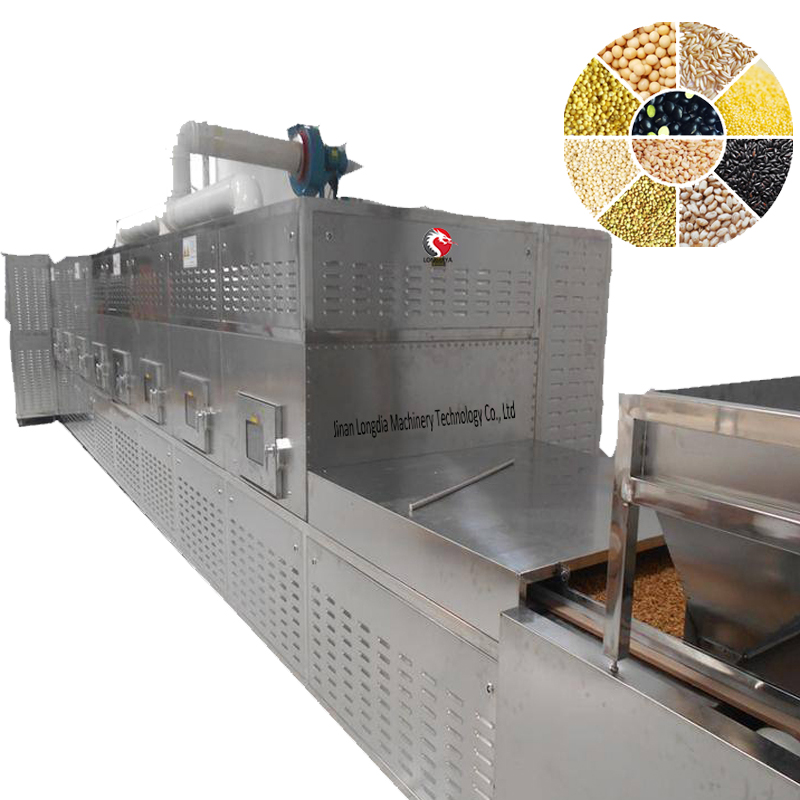
High-volume facilities need fully automated solutions. A continuous microwave dryer handles standardized production effortlessly. Bulk food processing facilities benefit immensely. Agriculture and industrial materials sectors adopt them widely. Tunnel designs accommodate massive daily tonnage. The automated belts move continuously. Sensors monitor moisture levels in real time. These units integrate seamlessly into existing conveyor lines. They maximize labor efficiency by eliminating manual handling. They offer highly consistent output round the clock. However, you must maintain strict upstream material consistency. Uneven feed rates disrupt the electromagnetic field. Inconsistent moisture causes poor results.
Some complex products degrade at normal atmospheric boiling points. Vacuum microwave systems excel here. They lower the required evaporation temperature artificially. They are best for extremely heat-sensitive products. You achieve rapid, low-temperature moisture removal. Many industries position VMD as a highly cost-effective alternative. It often replaces expensive freeze-drying processes. You save capital while preserving product texture.
Many facility managers focus solely on future operational savings. However, you must evaluate implementation realities transparently. Microwave drying equipment requires a significantly higher initial capital investment. You will face periodic magnetron replacements over the years. You must weigh these upfront costs against long-term operational savings.
Facility infrastructure demands strict, immediate attention. Industrial microwave generators need robust electrical support. They require highly stable three-phase industrial power. Voltage fluctuations cause severe performance drops. Some geographic areas lack stable power grids. You might require power conditioning equipment. You must plan for these contingencies early. You also need specialized water-cooling systems for the generators. Standard air cooling rarely suffices for heavy industrial-scale operations.
Worker safety objections frequently arise during equipment procurement. Modern systems utilize extremely robust industrial shielding. They feature automatic safety interlocks on all physical access doors. Opening a door instantly cuts the power. They strictly follow global electromagnetic emission standards. Organizations like the FCC and CE heavily regulate these safety limits. Harmful leakage is virtually nonexistent in properly maintained units.
Material variability introduces real daily production risks. Inconsistent feed rates cause immediate problems. Uneven initial moisture profiles lead to thermal runaway. Some product parts overcook severely. Other parts remain entirely wet. You must ensure consistent upstream processing. Predictable input guarantees uniform drying output.
Procuring this technology requires highly methodical evaluation. Follow these exact steps to ensure successful facility integration.
Step 1: Dielectric Feasibility Profiling
You must test your specific material first. Do this before ever requesting a vendor quote. Materials respond quite differently to 915 MHz or 2450 MHz frequencies. Water absorbs microwaves aggressively. Oils and fats absorb them differently. You must analyze the specific moisture ratio. You need to know its precise dielectric loss factor. This specific metric determines success. It tells you if the product will even absorb the energy. Some materials act transparently to microwaves.
Step 2: Pilot Testing
Lab-scale trials validate your initial engineering assumptions. They map exact moisture reduction curves accurately. Document the thermal degradation points carefully. Validate the final moisture content strictly. This data builds a reliable business case. They prove property retention claims definitively. You can test small batches easily. This helps optimize the ideal power density. It prevents incredibly costly mistakes at full production scale.
Step 3: Vendor Vetting
Manufacturer selection dictates your long-term success. Look for reliable vendors possessing in-house testing labs. They should offer comprehensive, ongoing post-installation support. Evaluate their custom waveguide design capabilities thoroughly. Standardized units rarely fit specialized industrial applications perfectly. You often need custom engineering. Strong vendors provide excellent technical guidance.
Transitioning away from legacy thermal processing is a highly targeted upgrade. It heavily benefits facilities constrained by time limitations. It solves space shortages and stops quality degradation. It reduces exorbitant energy costs. It is not a universal fix for every industrial material. Matching this technology to proper dielectric materials changes everything. You must align it to the correct production scale. The system shifts drying from a passive operational bottleneck into a massive competitive advantage. Take immediate action to validate your specific process. Schedule a comprehensive material feasibility test soon. Consult an experienced application engineer directly. They will help model your specific yield improvements accurately.
A: These systems require a higher upfront capital expenditure. However, they often deliver a much lower operational cost per kilogram of water removed. The targeted heating mechanism ensures high energy efficiency. You drastically reduce wasted heat, lowering your ongoing utility bills.
A: Materials containing zero moisture will not heat efficiently. Highly reflective metals damage the internal magnetrons by bouncing energy back. Additionally, materials possessing very low dielectric loss factors fail to absorb electromagnetic waves. They remain cold during the process.
A: Industrial magnetrons typically last between 5,000 and 8,000 hours. The exact lifespan depends heavily on your specific operational conditions and cooling efficiency. You must factor these replacements into your preventative maintenance schedules to avoid unexpected downtime.
A: Yes. Manufacturers frequently design these units modularly. They sit perfectly inline with existing extruders, tunnel ovens, or belt conveyors. Facilities often use them as a rapid pre-heating module or a highly efficient finish-drying boost.