Views: 0 Author: Site Editor Publish Time: 2026-09-03 Origin: Site
Traditional thermal processing limits modern food manufacturing capacities. Relying purely on convection or conduction often creates severe production bottlenecks. Plant operators frequently face excessively long wait times and inconsistent moisture removal across batches. Scaling production without sacrificing sensory qualities challenges many facility managers today. They urgently need faster, more efficient thermal alternatives to preserve natural color, delicate flavors, and essential nutrients. Conventional hot-air ovens simply cannot keep pace with these rigorous dual demands.
Today, industrial microwave drying equipment shifts the conventional heating paradigm entirely. By moving from surface-to-core thermal transfer to volumetric heating, it revolutionizes how fast moisture leaves the product. You will discover the operational business case, explore various equipment architectures, and understand critical adoption risks. This comprehensive guide helps production engineers determine if this technology matches their specific throughput and quality goals.
Volumetric Heating Reduces Cycle Times: By targeting water molecules directly, microwave drying reduces processing times from hours to minutes compared to conventional hot-air systems.
Enhances Product Quality: Rapid, lower-temperature moisture removal minimizes thermal degradation, preserving color, nutritional value, and flavor profiles.
Improves Facility Footprint: High energy density allows for shorter equipment lengths, saving premium factory floor space.
Requires Strategic Pilot Testing: Capital expenditure is high; successful adoption relies on thorough material testing to prevent dielectric heating risks like thermal runaway.
Many food processors struggle to maximize daily output using legacy methods. Conventional hot-air dryers present severe operational limitations. They rely entirely on conduction and convection. Heat must travel slowly from the outside atmosphere into the product core. This gradient creates a well-known defect called case hardening. The exterior dries too quickly and forms a rigid shell. This hard outer layer traps internal moisture permanently. It ruins product texture and significantly extends processing cycles. High energy waste becomes unavoidable when hot air exhausts out of the system without doing useful work.
A modern food microwave dryer solves this bottleneck completely. It leverages the unique physics of volumetric heating. Electromagnetic waves penetrate deep into the product mass instantly. They target polarized water molecules directly within the cellular structure. These molecules oscillate rapidly, generating immense internal friction. This friction vaporizes water from the inside out. Processors bypass the slow surface-to-core thermal transfer entirely. Internal vapor pressure pushes moisture to the surface naturally. This mechanism preserves the cellular integrity of delicate foods. It prevents shrinkage and maintains a superior rehydration capacity for dried goods.
This physical difference drives a massive operational shift. Facilities slash their drying times from several hours down to mere minutes. Faster processing means significantly higher daily throughput. It also drastically reduces work-in-progress (WIP) inventory sitting on the factory floor. Plant managers achieve a lower per-unit energy consumption rate. This efficiency holds especially true for high-moisture foods like fruits, vegetables, and meats. By accelerating the drying curve, facilities can fulfill larger orders without expanding their physical building footprint.
Drying Mechanism Comparison
Feature | Conventional Hot-Air Drying | Industrial Microwave Drying |
|---|---|---|
Heating Direction | Outside-in (Surface to core) | Inside-out (Volumetric) |
Processing Time | Hours to days | Minutes to hours |
Quality Risk | Case hardening, surface burning | Thermal runaway if unregulated |
Moisture Gradient | High (dry outside, wet inside) | Low (uniform moisture removal) |
Choosing the right system architecture dictates your long-term success. Production scale and product type guide this critical decision. You must select an architecture matching your material handling requirements.
Batch units process one defined load at a time inside a sealed cavity. They work best for low-volume, high-value specialty foods. Facilities requiring frequent product changeovers also prefer them. Operators gain precise environmental control over each specific load. You can tweak power parameters easily between different recipes. They also allow for vacuum integration, creating vacuum-microwave drying for extreme temperature sensitivity. However, batch systems demand manual loading and unloading. This intensive labor interrupts continuous throughput. It prevents seamless integration into fully automated processing lines.
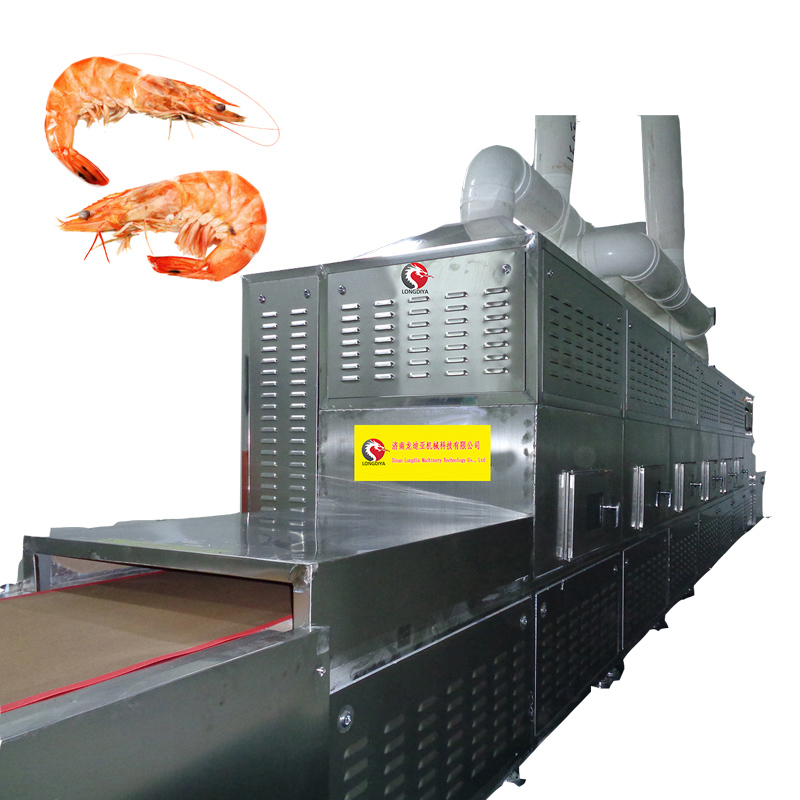
High-volume plants rely on the continuous tunnel dryer. It handles demanding industrial food dehydration tasks effortlessly. Uniformity at a massive scale remains mandatory here. Popular applications include extruded snacks, pasta, and bulk agricultural ingredients. The operational flow happens smoothly. Products move continuously on a conveyor belt. They pass through a long, multi-magnetron tunnel.
Advanced designs feature zoned power control. You can manage the drying curve precisely. Operators apply higher microwave power at the tunnel entrance where moisture is highest. They reduce microwave intensity progressively as moisture decreases along the belt. This prevents burning and ensures a perfectly uniform exit moisture. These systems typically use either 915 MHz or 2450 MHz frequencies. The 915 MHz frequency penetrates deeper, making it ideal for thicker food blocks. The 2450 MHz frequency works perfectly for thinner, surface-level snack items.
When you invest in a comprehensive microwave drying line, you must evaluate several critical factors. Engineering teams cannot treat these systems like simple ovens.
Production volumes rarely stay static. You want a system capable of growing alongside your business. Look for modular equipment designs. They allow engineers to add extra microwave generators later. This flexibility scales your capacity without requiring an entirely new machine. A modular chassis lets you extend the tunnel length. You simply drop in new power packs as your market demand increases.
Food safety remains a non-negotiable priority in any processing facility. You must assess the equipment's washdown capabilities thoroughly. Check the specific IP ratings for all electrical enclosures. You need IP65 or higher for wet cleaning environments. Ensure strict compliance with USDA and FDA food safety standards. The conveyor belt must feature zero harborage points. Bacteria cannot hide in a properly designed, easily accessible system. Hinged doors and slide-out belts make daily sanitation shifts much faster.
Modern processing requires smart, responsive technology. Advanced Programmable Logic Controllers (PLCs) form the brain of the operation. Infrared (IR) temperature sensors serve as the eyes. They monitor real-time product temperatures continuously across the belt.
Best Practices for Automation Integration:
Implement Closed-Loop Feedback: Ensure sensors communicate directly with generators to adjust power instantly.
Map Moisture Profiles: Use data logging to track input versus exit moisture across different shifts.
Set Safety Interlocks: Program automatic shutdowns if belt speeds drop unexpectedly.
Calibrate IR Sensors: Clean and calibrate optical sensors weekly to prevent false readings.
Sometimes microwaves work best alongside older methods. You should evaluate hybrid integration potential carefully. Can you pair the microwave unit with existing hot-air dryers? Many facilities use hot air to remove surface free-water first. They then use microwave energy to extract the stubborn bound-water from the core. Vacuum drying lines also benefit from microwave assistance. A hybrid approach optimizes the final moisture target efficiently. It utilizes the best physical traits of both heating methods.
Adopting new thermal technology carries inherent physical risks. You must understand the specific limitations of dielectric heating to maintain safety.
Microwaves target mass and moisture specifically. They do not heat empty space. Inconsistent product sizing causes major processing problems. Uneven belt loading leads directly to hot spots. Some batches emerge completely under-dried while others burn. You must ensure consistent input materials before processing begins. Upstream sizing, dicing, and slicing require strict quality control.
Common Mistakes in Material Handling:
Piling product too high in the center of the conveyor belt.
Mixing different food types with wildly varying moisture levels.
Ignoring ambient humidity changes in the factory air.
Failing to level the product bed before it enters the tunnel.
Operators must prevent catastrophic thermal runaway. This phenomenon happens when product moisture drops too low. The dry material continues to absorb high microwave energy. It rapidly overheats, carbonizes, and can catch fire. Arcing occurs when electromagnetic waves discharge against metallic fragments or dense carbon buildups. You must address this risk through precise dielectric property profiling. Map exactly how your specific food behaves under microwave exposure. Understand its dielectric constant and loss factor. Foods high in salt or sugar absorb energy differently than pure starch. Adjust your power recipes accordingly to maintain a safe drying curve.
Procurement teams need a structured validation process. You cannot guess how a food product will react to electromagnetic waves.
Never buy a full-scale system based on theory alone. Buyers must demand rigorous small-scale pilot testing. You should use your exact food product during these trials. Substitute ingredients will skew the results. Different sugar, fat, and salt contents alter heating dynamics fundamentally. Test real batches before committing to a custom build. Watch how the cellular structure responds. Check for starch gelatinization or unwanted protein denaturation.
Establish strict Key Performance Indicators (KPIs) for the pilot phase early. Ambiguity leads to poor procurement decisions. Set clear, measurable targets. Demand a final moisture variance of less than 2% across the entire belt width. Require absolute zero surface burning or discoloration. Target a minimum 40% reduction in overall cycle time compared to your current hot-air process. Document these metrics formally during the factory acceptance test.
Even the most robust equipment experiences downtime eventually. Assess the manufacturer's Service Level Agreement carefully. Magnetrons operate under immense stress and eventually fail. Ensure the manufacturer guarantees rapid on-site troubleshooting. Verify they keep critical spare parts in domestic inventory. A strong support network keeps your line running continuously. Ask for references from other food processors to validate their response times.
Industrial microwave drying equipment offers transformative speed and quality advantages for modern food processors. It bypasses the limitations of conduction heating, delivering rapid volumetric moisture removal. You can protect sensory qualities, reduce factory footprint, and increase daily throughput. However, this technology requires a highly controlled production environment. You must provide incredibly consistent input materials and maintain strict automation protocols.
We recommend that operations teams initiate a dielectric properties assessment immediately. Test your specific product as the first mandatory step in the procurement process. Gather real data, run pilot tests, and establish clear success metrics. This rigorous approach ensures you select the perfect microwave architecture for your facility.
A: Yes. Industrial systems operate under strict OSHA and FCC regulations. They feature robust physical shielding, choke designs at entry and exit points, and sophisticated interlock systems. These mechanisms instantly cut power if a door opens, completely eliminating radiation leakage risks for personnel.
A: The technology proves highly effective for uniform products with moderate to high initial moisture. Excellent candidates include extruded snacks, fruits, vegetables, pasta, and certain meats. It acts less efficiently for products with extremely low starting moisture, as there are fewer water molecules to target.
A: Depending on the operating environment and frequency of use, industrial magnetrons typically require replacement every 5,000 to 8,000 operational hours. Facility managers should monitor output efficiency closely. Proactive replacement ensures consistent heating profiles and prevents unexpected production downtime.