Views: 0 Author: Site Editor Publish Time: 2026-08-31 Origin: Site
Sizing industrial thawing systems is a high-stakes CAPEX decision. Underestimating capacity creates severe production bottlenecks. Overestimating wastes valuable capital and precious floor space. Moving from traditional air or water defrosting to microwave technology requires a precise calculation of thermal requirements against strict facility constraints. A miscalculation can compromise product quality or stall downstream operations entirely. You need a reliable method to map specific product characteristics directly to exact machine capabilities. This ensures a seamless transition and continuous workflow.
This article provides plant managers and process engineers a practical, physics-based framework. You will learn how to calculate your required kW power accurately. We will help you select the right equipment configuration. You will also discover how to evaluate implementation realities. Read on to master the variables defining your next industrial installation.
Throughput dictates power: Standard industrial sizing requires approximately 1 kW of microwave power for every 10–15 kg of frozen product processed per hour, depending on specific heat and temperature delta.
Product state matters: Starting temperatures (e.g., -18°C vs. -25°C) and product composition (fat-to-lean ratios) drastically alter necessary equipment capacity.
Format dictates footprint: Choosing between batch systems and continuous tunnels depends entirely on your shift schedules and standardized block sizes.
Facility readiness is a prerequisite: Magnetron cooling systems and high-voltage grid access are often overlooked limiting factors in installation.
Before evaluating microwave thawing equipment specifications, facility engineers must lock in exact production variables. Operating blindly without solid baseline metrics guarantees failure. You must define your raw materials precisely. Process engineering relies on physics, not guesswork. Therefore, mapping your exact input conditions remains your absolute first step.
You must define exact starting core temperatures. Facilities commonly store frozen blocks between -18°C and -20°C. Next, determine the exact target tempering temperature. Slicing or grinding operations usually require -4°C to -2°C. The difference between these two numbers is your Temperature Delta (ΔT). This metric directly drives your power requirements.
Risk Note: Pushing targets above -2°C introduces severe thermal runaway risks. Microwave energy targets liquid water aggressively. If localized sections thaw completely, they absorb energy faster than frozen sections. This leads to edge-cooking and ruined product. Always size the equipment strictly for tempering. Do not aim for full ambient defrosting.
Different proteins absorb thermal energy at different rates. Specific heat capacity varies significantly across beef, poultry, and seafood. High-fat content changes how microwaves penetrate the block. Lean muscle mass requires a different energy profile than fatty cuts. You must account for these biological differences during initial planning.
Physical dimensions also dictate physical equipment design. Facilities commonly use standard Euroblock sizes, such as 20kg or 25kg formats. These uniform dimensions dictate the physical aperture of the microwave cavity. A cavity too small causes immediate operational blockages. A cavity too large reduces energy density and efficiency.
Common Specific Heat Values (Approximate)
Product Category | Fat Content Estimate | Behavior Under Microwaves |
|---|---|---|
Lean Beef | Low to Medium | Predictable penetration; requires uniform energy distribution. |
Pork Belly | High | Fat heats differently; requires careful power modulation. |
IQF Seafood | Very Low | Highly sensitive to edge-cooking; demands precise temperature control. |
Translating theoretical physics into actual machinery requirements requires rigorous evaluation. Engineers must evaluate this dimension strictly from a technical standpoint. We must convert daily tonnage targets into raw electrical demands. This calculation serves as the foundation for modern industrial food thawing processes.
Introduce the standard sizing formula to your engineering team. The calculation is straightforward: Mass (kg/h) × Specific Heat × ΔT / Microwave Efficiency = Required kW. Most commercial systems operate at roughly 75% to 85% efficiency. You must factor this efficiency loss into your final power specifications. Do not assume 100% energy transfer.
You must also factor in the latent heat of fusion. Water transitions near -5°C to -1°C. This phase change requires a massive energy spike. Ice requires much less energy to warm than the transition from ice to liquid. If your tempering target crosses this threshold deeply, your kW requirements will climb exponentially.
Always incorporate robust safety margins. We advise adding a 15–20% operational buffer to the calculated kW. Why? Magnetrons lose efficiency as they age. Seasonal temperature variations in raw material storage also impact your starting core temperatures. A buffer ensures you never throttle downstream production due to unexpected equipment limitations.
Determine exact kg processed per hour.
Calculate specific heat and ΔT requirements.
Divide by 0.80 (average efficiency).
Add a 20% safety buffer for real-world operations.
You must match equipment style to workflow realities and your total food processing capacity. Selecting the wrong configuration cripples facility throughput. Solution categories fall broadly into two types. You can implement batch cabinets or continuous tunnel conveyors. The choice depends entirely on your daily production tempo.
Batch systems excel in specific environments. They remain best for varied product types and lower throughput operations processing under 500 kg/hr. If your facility features tight, irregular floor plans, batch cabinets fit easily into existing corners. They do not demand long, linear footprints.
Batch systems offer significant pros. They carry a lower initial CAPEX. They prove highly flexible for processing mixed SKUs in a single shift. Operators simply load a pallet, select a recipe, and wait. However, they require constant manual intervention for loading and unloading.
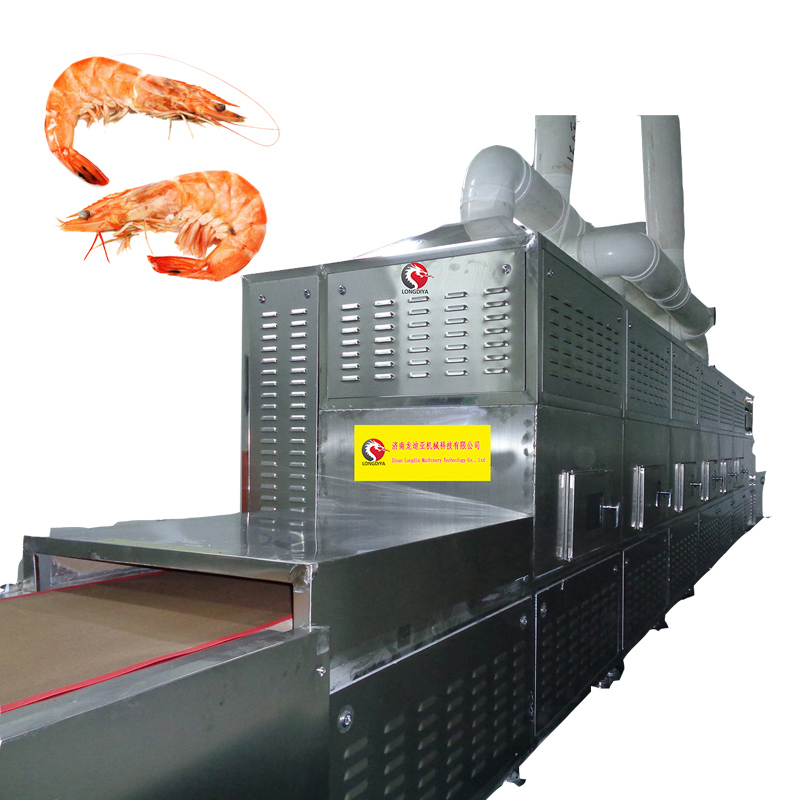
Continuous tunnels serve heavy-duty industrial applications. They represent the best choice for a dedicated meat thawing line requiring high volume. If you process 1,000 to 5,000+ kg/hr of standardized frozen blocks, you need a tunnel. They handle relentless, non-stop production schedules seamlessly.
The pros of continuous systems justify their higher investment. They provide seamless inline integration with downstream slicers or grinders. They drastically reduce forklift traffic across the plant floor. Most importantly, they deliver a consistent, predictable pacing for downstream processing operations.
Configuration Comparison Chart
Criteria | Batch Systems | Continuous Tunnels |
|---|---|---|
Throughput | < 500 kg/hr | 1,000 – 5,000+ kg/hr |
Floor Space | Compact, modular | Long linear footprint required |
SKU Flexibility | High (easy recipe switching) | Moderate (best for standardized blocks) |
Labor Demands | Higher (frequent manual loading) | Lower (automated conveying) |
Implementation risks often derail ambitious facility upgrades. You must understand where equipment deployments typically fail. Buying a machine is easy. Installing it successfully requires rigorous preparation. Overlooking basic facility utilities will stall your project for months.
Electrical infrastructure demands immediate evaluation. Assess whether your plant grid can handle the massive draw. Industrial systems range anywhere from 50kW to 150kW+. They require stable 480V 3-phase power. Voltage drops during peak plant operations will trip safety sensors and halt the thawing process.
Cooling requirements represent another hidden constraint. Detail the absolute necessity of industrial water chillers. High-power magnetrons generate intense heat. You must extract this heat to prevent catastrophic component failure. This typically requires specialized plumbing, robust circulation pumps, and dedicated floor drains.
Space and conveyance logistics require meticulous mapping. You must account for the entire physical footprint. This includes ample loading and unloading zones for forklifts.
Provide at least one meter of clearance around cabinets for maintenance.
Ensure clear sanitation access for nightly washdown crews.
Map out how tempered blocks transition to the next conveyor belt.
Verify overhead clearances for ducting and exhaust lines.
Shortlisting vendors requires objective criteria. You need a method to separate reliable OEMs from underperforming vendors. Marketing brochures often overstate equipment capabilities. You must demand hard data before making a purchasing decision.
Demand strict uniformity guarantees. Look for vendors capable of providing empirical data. They must demonstrate temperature variance across the center and edges of your specific product block. A variance of more than 2-3 degrees indicates poor cavity design. Poor distribution leads directly to product waste.
Sanitary design and compliance remain non-negotiable. Ensure equipment meets rigorous USDA or FDA washdown standards. Inspect the spec sheets for IP65+ ratings. Look for sloped surfaces to prevent water pooling. Cavity designs must be easily accessible for daily cleaning crews.
Always demand pilot testing availability. Never purchase equipment based solely on theoretical spec sheets. A credible vendor must offer a lab or pilot facility. You must test your actual product blocks before approving final sizing. If a vendor refuses to run a pilot test, remove them from your list immediately.
Correct sizing of batch systems or continuous microwave thawing lines hinges on accurate data. You must know your temperature deltas. You must define exact product characteristics. You must also verify your facility power capabilities prior to purchase.
Calculate your required kW using specific heat, mass, and delta T.
Add a 20% safety margin for magnetron aging and seasonal variations.
Prioritize modular flexibility for future volume increases, such as tunnels accepting additional generators later.
Audit your electrical and cooling infrastructure immediately.
Document your hourly kg requirements and standard block dimensions before engaging any vendor for a pilot test.
A: Space requirements vary by configuration. Batch systems can fit securely in a few square meters. They work well for tight layouts. Conversely, continuous tunnels require a linear footprint. They can span anywhere from 5 to 15 meters, depending entirely on your required throughput and conveyor design.
A: Yes, provided the system features advanced controls. The machine must have adjustable conveyor speeds. It also needs variable power output capabilities. These features allow operators to accommodate the vastly different specific heat capacities of dense meat blocks versus delicate IQF seafood.
A: Not if sized and programmed correctly. The absolute goal is tempering. You bring the product from -18°C to roughly -3°C. This specific range allows for mechanical processing downstream. It prevents thermal runaway and avoids causing any protein denaturation on the product surface.